
The 2026 International Conference on Deep Learning and Automation (ICDLA 2026) Successfully Concluded in Guilin
From August 3 to 8, 2026, the 2026 International Conference on Deep Learning and Automation (ICDLA 2026), as a key component of the 2026 Frontiers of Digital Intelligence Academic Week (Guilin), was successfully held at the Guishan Huaxing Hotel in Guilin. Supported by Nanfang College Guangzhou, the School of Engineering of Nanfang College Guangzhou, Guangxi University of Science and Technology, the Guangxi Society of Image and Graphics, Hangzhou Dianzi University, SpinQ Technology, Xi'an University of Technology, the School of Automation and Information Engineering of Xi'an University of Technology, and the School of Computer Science and Engineering of Sun Yat-sen University, the Academic Week adopted a co-located multi-conference format under the theme "One Venue, Multiple Conferences, One Pass," bringing together experts and scholars from home and abroad to engage in in-depth exchanges and discussions on cutting-edge fields including deep learning, intelligent automation, quantum computing and communication, and computational imaging and artificial intelligence.

Conference Venue
On the morning of August 4, the Academic Week officially opened at the Qixing Hall on the 2nd Floor of the Guishan Huaxing Hotel. Following the opening ceremony, the conference moved into its keynote speech session. Professor Loi Lei Lai, IEEE Life Fellow and IET Fellow from DRPT International Inc., Australia, delivered a talk entitled "Artificial Intelligence for Smart Cities Deployment," addressing key smart city topics including energy, mobility, health, education, and standards development, and exploring frontier directions such as health status monitoring using smart meter data, EV charging networks and vehicle-grid integration, microgrid and thermal energy storage system integration, and urban air mobility. Professor Weijia Jia, IEEE Fellow from Beijing Normal University (BNU-Zhuhai), China, presented on "Agent-based Quality Question-Answer in Open Environment," introducing an open-loop agent QA system for open-domain tabular question answering, a large-scale benchmark comprising 5,000 tables and 75,000 QA pairs, and a hierarchical agent framework for effectively integrating heterogeneous evidence. Professor Mouquan Shen from Nanjing Tech University, China, delivered a talk entitled "Event-triggered Model-free Optimal Control," introducing three model-free optimal control strategies designed respectively by adopting the finite-time control method, the disturbance estimation method combined with the extended state observer, and the adaptive dynamic programming method, along with three novel event-triggered mechanisms.
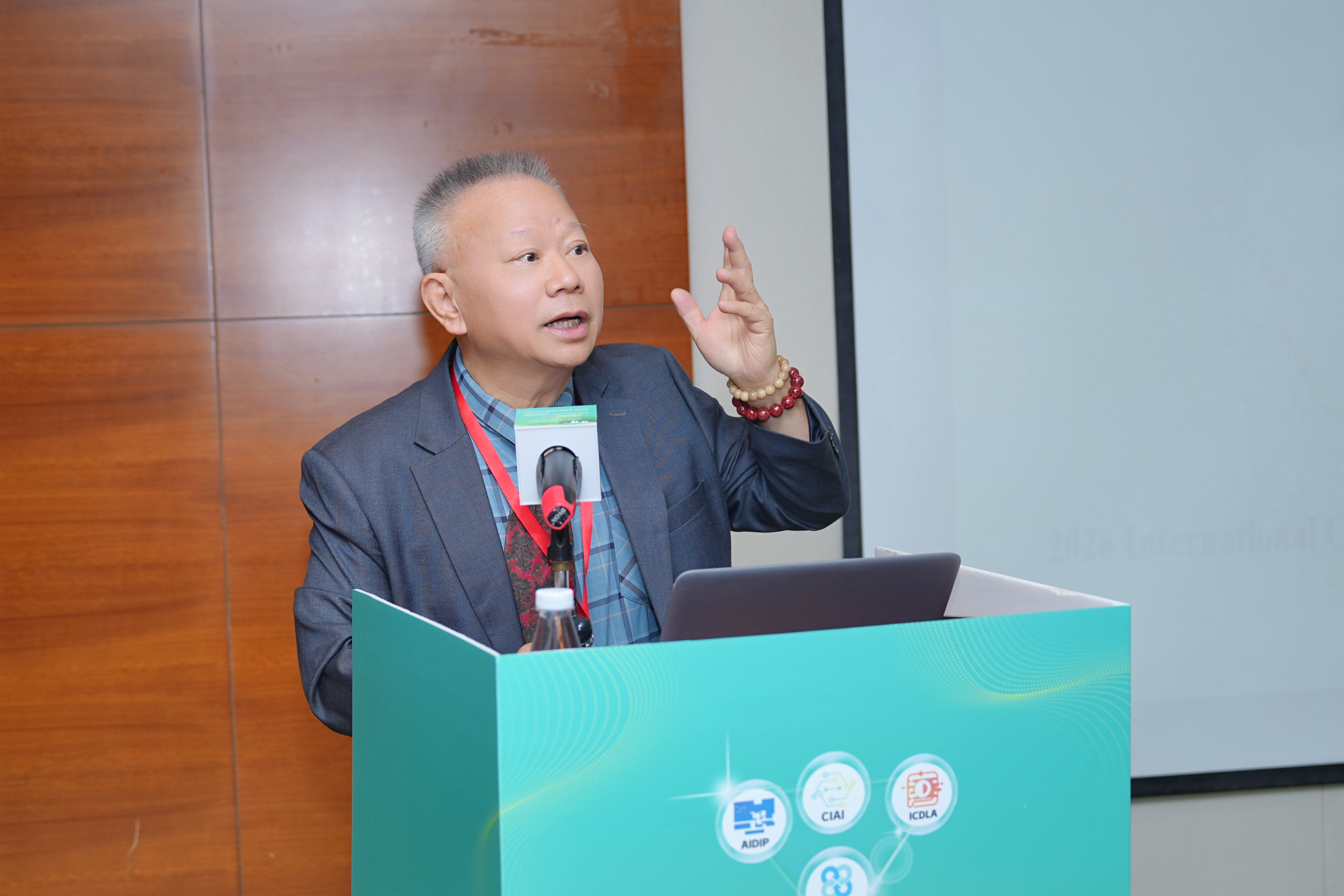
Prof. Loi Lei Lai,IEEE Fellow, DRPT International Inc., Australia

Professor Weijia Jia, IEEE Fellow, Beijing Normal University (BNU-Zhuhai), China
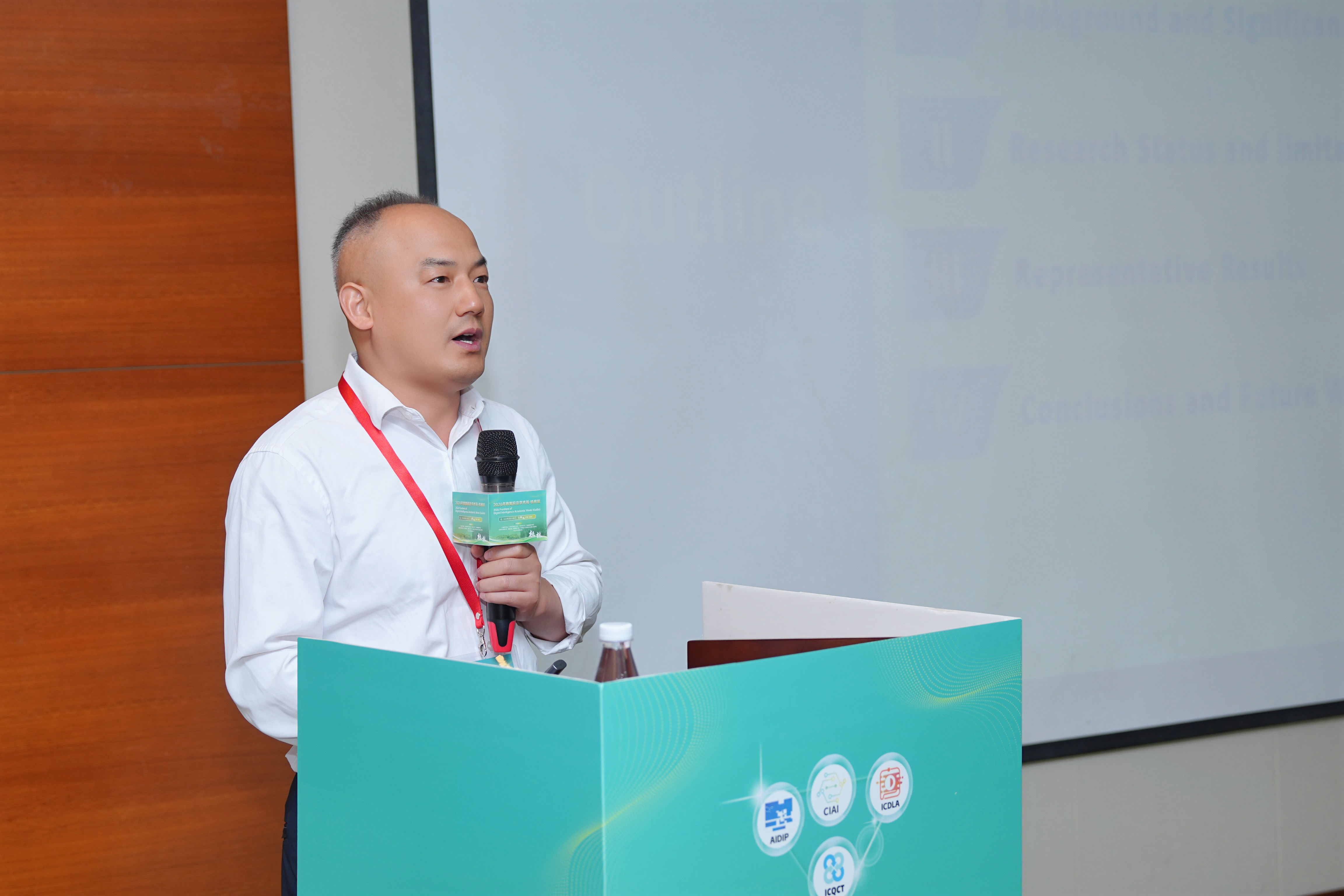
Professor Mouquan Shen, Nanjing Tech University, China
On the morning of August 5, the keynote speech session continued with impressive presentations. Professor Lei Shen from Hangzhou Dianzi University, China, delivered a talk entitled "Signal Detection, Modulation Recognition, and Individual Recognition Based on Deep Learning," introducing the research approach of converting signals into images and using machine vision for signal detection and parameter estimation, as well as image-based technologies and applications for various signal modulation methods, protocol recognition, and individual recognition. Associate Professor Ir Ts. Dr Wong Shen Yuong from Sunway University, Malaysia, presented on "Deep Learning-Driven Intelligent Automation for Sustainable Smart Grid Cyber-Physical Systems," discussing the emerging role of Green IoT in sustainable smart grid communication and intelligent monitoring, and analyzing how energy-efficient communication protocols, edge AI, intelligent sensing, and sustainable IoT infrastructures can reduce communication overhead, energy consumption, and carbon emissions. Professor Ouri Wolfson, IEEE Fellow, ACM Fellow, AAAS Fellow, and AAIA Fellow from the University of Illinois Chicago, USA, delivered a talk entitled "Can AI Have Genuine Emotions, and If So How Would We Know?" proposing a transferable definition of Machine Correlates of Consciousness (MCCs) and presenting initial empirical evidence for the presence of MCCs based on experiments with Llama-2 7B and Llama-3.1 70B.

Professor Lei Shen from Hangzhou Dianzi University, China
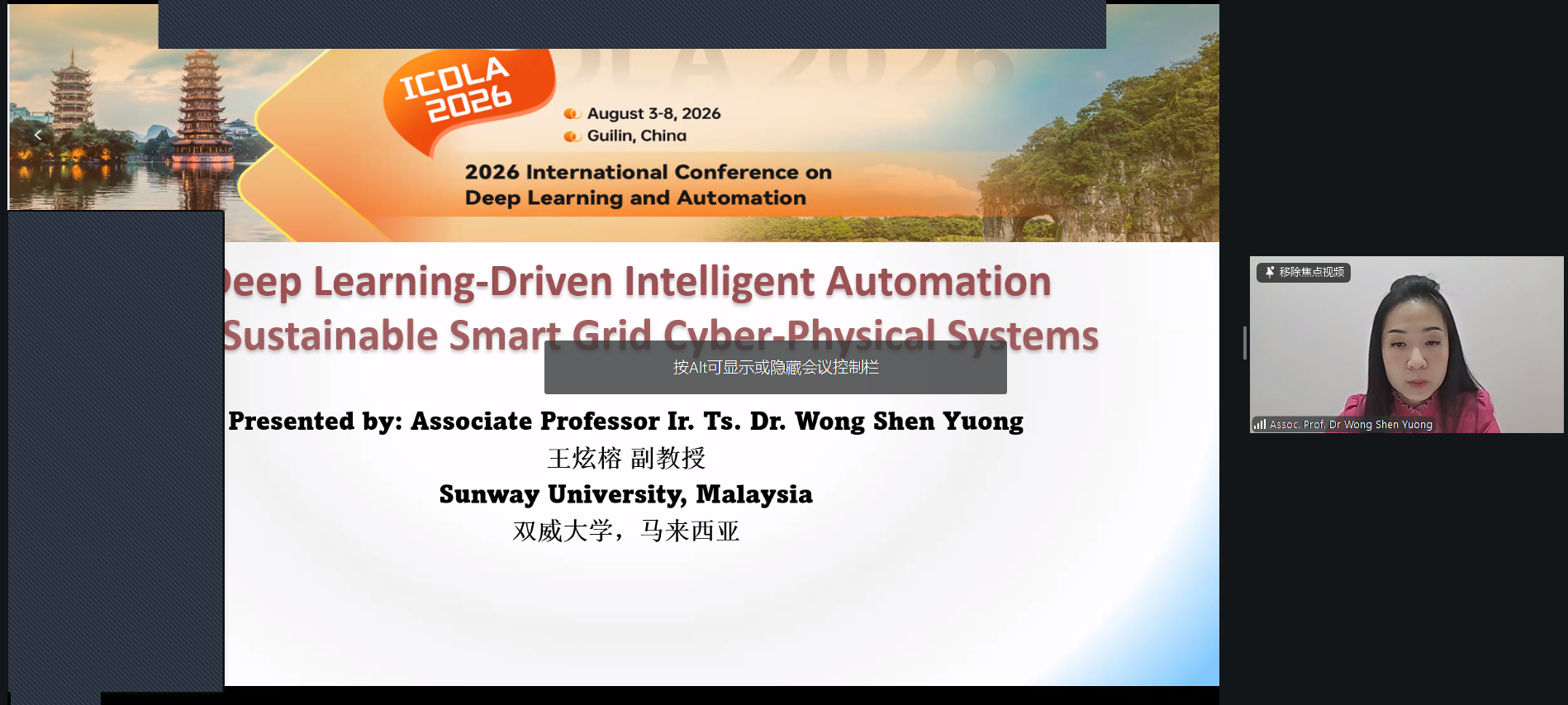
Associate Professor Ir Ts. Dr Wong Shen Yuong, Sunway University, Malaysia

Prof. Ouri Wolfson, University of Illinois Chicago, USA
The morning of August 5 also featured an oral presentation session, where young scholars from Xinjiang University, Beijing Institute of Graphic Communication, Shanghai University of Engineering Science, Guilin University of Electronic Technology, and Guangzhou Xinhua University presented their latest research findings on topics including the impact of verisimilitude in text and image modalities on Gen Z's accuracy in detecting AI-generated misinformation, improving knowledge-point focus for educational question generation using structured multimodal knowledge sources, causal modality dropout with counterfactual perturbation for robust multimodal intent recognition, analysis of digital inclusion and health effects based on explainable AI and double machine learning, edge-conscious loss for boundary-aware 3D tooth point cloud segmentation, and power insulator defect detection fusing attention mechanisms and multi-scale features, fully demonstrating the innovative vitality of young researchers.
In the afternoon of August 5 and from August 6 to 7, the Academic Week continued with keynote speeches and oral presentations for ICQCT 2026 (Quantum Computing and Communication Technology) and CIAI 2026 (Computational Imaging and Artificial Intelligence), covering directions including AI-native quantum computing and communication, post-quantum cryptography, a resource-efficient variational quantum framework for the traveling salesman problem, non-uniform illumination underwater image enhancement, and multi-modal spatio-temporal modeling for video anomaly detection, further expanding the interdisciplinary horizons of digital intelligence. On August 8, the Academic Week organized an academic discussion session.


With the collective efforts of all parties involved, the Academic Week achieved great success, fully showcasing the latest research outcomes and cutting-edge technologies in deep learning, automation, and digital intelligence, and facilitating the exchange and collision of academic ideas. We look forward to meeting again in Guilin to jointly advance innovation in the frontiers of digital intelligence.